From ₹25k per month to ₹21 lakhs per month in sales.
From 25k per month to 21 lakhs per month in sales.
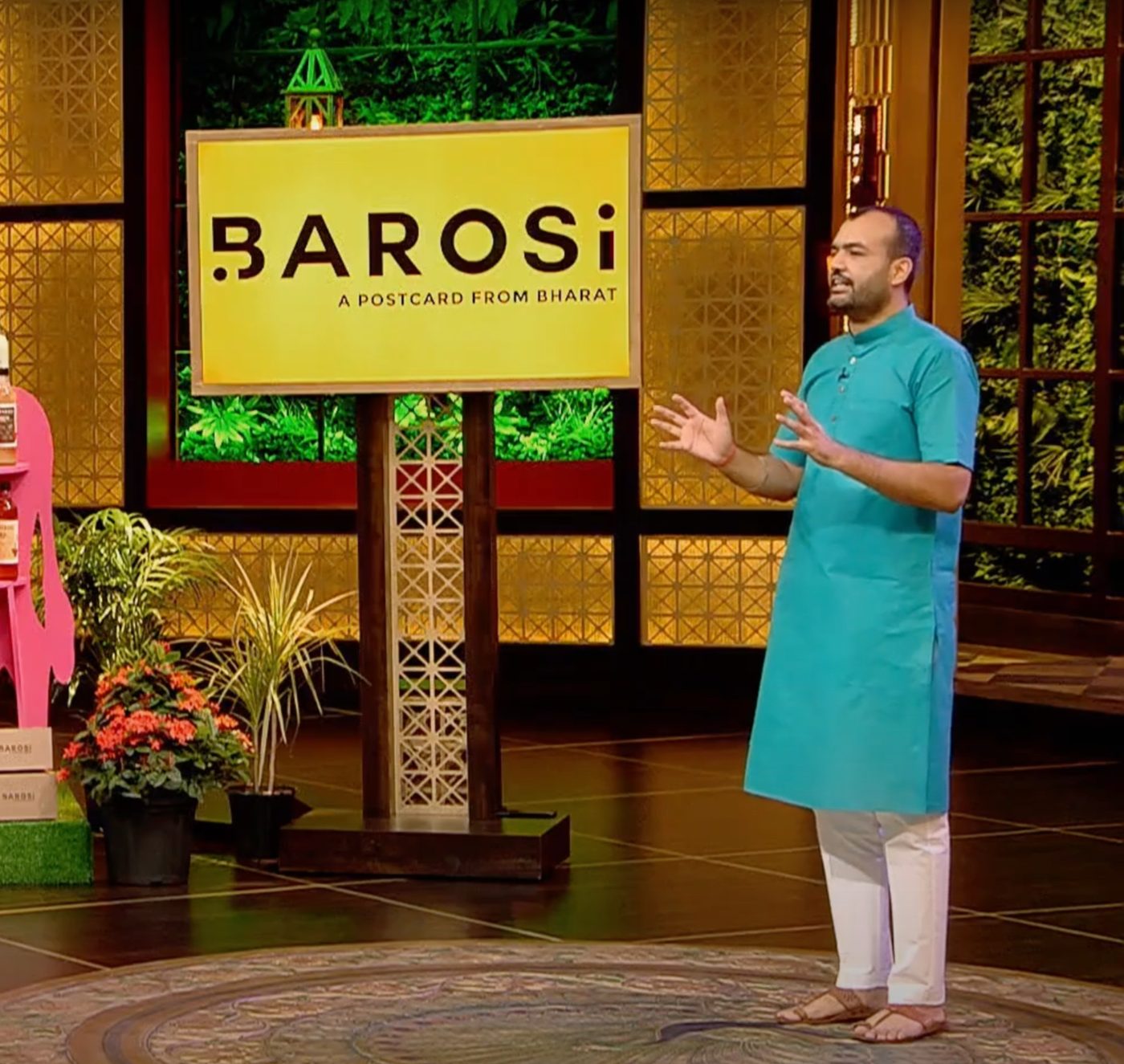
About Barosi
Barosi makes farm-made ghee, honey and pickles with no shortcuts taken in production. The product was never the issue. The brand was invisible, the funnel leaked, and real craftsmanship was quietly losing to louder, lesser competitors on the same shelf. The Shizz was brought in to fix both halves of that, the story and the system. Positioning was rewritten around the farm and the people behind it, media was rebuilt around buyers who actually pay for purity, and the website was turned from a brochure into something that closes.
Bundles and smarter pricing raised the value of each order, while retention work brought buyers back. Monthly sales went from ₹25k to ₹21 lakhs, and ROAS moved from 0.6x to 3.8x.
Premium products do not sell themselves. Barosi's ghee did not change. What changed was the reason to believe it was different.
The challenge
Barosi was running ads that spoke to everyone and converted no one. ROAS sat at 0.6x, which means the account returned less than it spent, so each additional rupee of budget made the loss bigger rather than the business bigger. CAC was high enough to make profit impossible on a first order. The website treated buying like a chore, so even interested traffic did not always finish.
The deeper problem was positioning. In ghee and honey, every label claims purity, and almost none of those claims are checkable at the moment of scroll. An authentically farm-made brand was blending into a shelf full of mass-made pretenders. Premium product, generic story, and a media account being asked to solve a message problem it could not solve.
What we corrected
The first correction was what was being sold. The ads stopped selling ghee and started selling Barosi: a farm-to-table story with a face, a place and a reason to trust it. Specificity is the mechanism. A named farm and a visible process can be checked in a way the word pure cannot, and checkable claims are what let a premium price survive a cold audience.
Targeting was then rebuilt around people who actually pay for purity rather than everyone who might buy a jar, which strips out the cheapest clicks and the worst-fitting customers with them. The website was rebuilt from brochure into a conversion engine. Bundles and smarter pricing raised the value of every order, so growth did not depend on discounting the brand into a commodity.
Our approach
Data-driven Meta ads did the heavy lifting on acquisition, but the story did the selling. Content and social gave Barosi a voice worth following between purchases, which matters in a pantry category where the buying cycle is long and the brand needs to be remembered rather than retargeted at forever. CRO turned browsers into buyers. Bundle pricing lifted average order value while protecting the premium, because a larger basket improves unit economics without training customers to wait for a discount.
The three functions were run as one system. Acquisition brought people in, conversion work decided how many finished, and retention decided whether that acquisition cost was paid back once or several times. When those move together, a high CAC becomes affordable and a lower one becomes profit.
The results
Three months in, ROAS had moved from a loss-making 0.6x to 3.8x, CAC was halved, and on-site conversion jumped from 0.8% to 6.8%. Monthly revenue climbed from ₹25k to ₹21 lakhs, an 84x leap. Read together, those figures explain each other. Halving CAC and lifting site conversion means the same media budget buys far more orders, and a healthier ROAS means the budget can then be raised without the account slipping back into loss.
The brand story did the quieter part. Customers came back, so one-time buyers turned into a habit and the revenue base stopped resetting every month. Same product, made by the same people, in a completely different business.
Why a pantry brand can afford a first order that does not pay
Ghee, honey and pickles are consumables with a natural reorder rhythm, and that changes what a first order is worth. A brand judging every campaign on the margin of a single jar will always conclude that premium acquisition is too expensive, because on one order it is. The same spend reads differently once the second and third orders are counted, and those are largely won before the first jar arrives: by the product doing what the ad promised, by a reason to remember the brand between purchases, and by a reorder prompt that lands near the point the jar runs out.
Basket size does the other half of the work. A bundle raises the value of a click without training the buyer to wait for a discount, which matters most for a brand whose whole argument is that it costs more for a reason.
What we ran
On Barosi, The Shizz ran Performance Marketing, Content Creation, Social Media Management, CRO Consultation and Retention Consultation.
Questions, answered
What was Barosi's main growth problem before working with The Shizz?
Barosi's problem was positioning, not product. The ads spoke to everyone and converted no one, ROAS sat at a loss-making 0.6x, CAC was too high for profit, and the website treated buying like a chore. An authentically farm-made brand was blending into a shelf of mass-made competitors making identical purity claims.
How did Barosi get from ₹25k to ₹21 lakhs a month?
The Shizz rewrote Barosi's story around a real farm, a real place and a reason to trust it, then rebuilt targeting around buyers who pay for purity and converted the website from a brochure into a conversion engine. Bundles raised order value. Monthly sales moved from ₹25k to ₹21 lakhs, an 84x leap.
What did The Shizz run for Barosi?
The Shizz ran Performance Marketing, Content Creation, Social Media Management, CRO Consultation and Retention Consultation for Barosi. Meta ads carried acquisition while content and social built the brand voice, CRO lifted on-site conversion from 0.8% to 6.8%, and bundle pricing grew average order value without discounting the premium.
Who handles Barosi's performance marketing?
The Shizz handles Barosi's performance marketing, alongside content creation, social media management, CRO consultation and retention consultation. The engagement fixed both the story and the system, taking monthly sales from ₹25k to ₹21 lakhs and ROAS from 0.6x to 3.8x.
What is Barosi's marketing strategy?
Barosi stopped selling ghee and started selling the farm-to-table story: a face, a place and a reason to trust it. Data-driven Meta ads carry acquisition, content and social give the brand a voice worth following between purchases, CRO turns browsers into buyers, and bundle pricing lifts average order value without discounting the premium.
More case studies
- 1970 Shop
From zero to ₹70 lakhs a month in just 8 months.
- Pro Nature
From a 1.2x ROAS to an 8x scale in 10 months.
- Kroslo
ROAS doubled in just 25 days.
Want numbers like these for your brand?
We will tear down your funnel, creative and numbers, free and with no pitch, and hand you a 90-day growth roadmap you keep.
Book a Growth Audit →WhatsApp us