From 1.6x to over 3.5x ROAS, without hunting for cheaper clicks.
From a 1.6x ROAS to over 3.5x, with AOV up 25% and conversion up 40%.
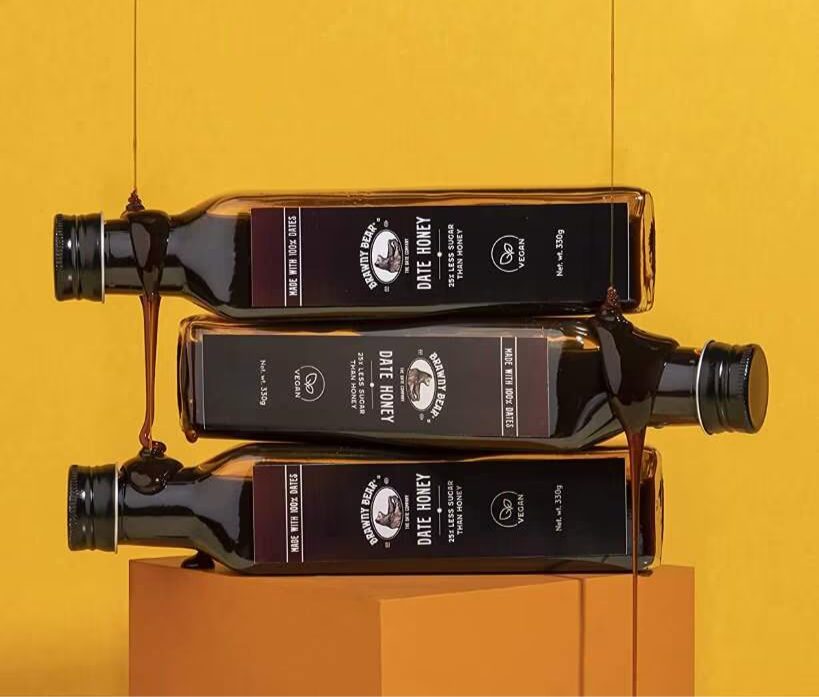
About Brawny Bear
Brawny Bear is India's first date company. It turns dates into gourmet nut butters, chocolates and snacks that are genuinely good for you. Awareness was not the problem. Plenty of people had noticed the brand. The economics were. ROAS sat around 1.6x, the messaging wandered from ad to ad, and there was no path to scale that did not involve spending more to earn less.
The Shizz built the operating system underneath the marketing: a creative framework, a full funnel, a CRO pass on the buying journey, and campaigns aimed at the segments that convert. Meta and Google carried acquisition while retention work brought buyers back. ROAS moved past 3.5x, average order value rose 25%, and conversion improved 40%.
A good product with no creative system produces good months and bad months at random. The system is what makes the good ones repeatable.
The challenge
There was no creative system, so the messaging wandered and engagement followed it down. Without a framework every ad restarts the argument from scratch, so nothing compounds and the audience never hears the same claim twice. Nothing was being done to lift average order value either, which caps revenue by design: if basket size is fixed, the only way to grow is to buy more customers, and that gets more expensive every month.
There was no real funnel, so cold audiences and ready buyers were treated identically and ROAS had nowhere to climb. Website tracking was patchy on top of all of it, which meant the account was being optimised on incomplete data. Good product, no operating system underneath it.
What we corrected
The missing system was built. A CRO pass smoothed the buying journey, usually the cheapest lift in any account because the traffic has already been paid for. Campaigns were pointed at the segments that convert rather than the widest reachable audience. A full funnel was put in place, carrying people from not knowing the brand, to buying, to coming back, with different creative at each stage.
The last correction was product focus. Instead of spreading budget evenly across the catalogue, the high-potential products were singled out and given real weight. Concentrating spend on a few proven sellers gives each enough volume to produce reliable data, which is what makes the next decision better than a guess.
Our approach
The copy was written to a real tension using PAS and AIDA: name the guilt around snacking, press on it, then present Brawny Bear as the obvious fix. Those frameworks work in food because the purchase is emotional first and rational second, and a structured argument reaches that part faster than a feature list. Scroll-stopping creative and user-generated content did the catching.
UGC carries particular weight in snacking, where the honest question is whether a healthier version tastes good, and a stranger on camera answers that more credibly than a brand claim. Targeting across Meta and Google aimed at the buyer who repeats rather than the one who clicks once out of curiosity, since a repeat buyer pays acquisition cost back more than once.
The results
ROAS more than doubled, from 1.6x to over 3.5x, so every rupee of spend finally pulled its weight. Bundling and cross-sell lifted average order value 25%, and CRO improved conversion 40%. Those two act on the same traffic. A 25% larger basket and a 40% better conversion rate mean each visit is worth more before a single extra rupee of media is spent, which is why returns moved rather than the account buying cheaper clicks.
Revenue climbed month after month, which is what a working funnel produces rather than what a single winning ad produces. Brawny Bear went from a brand people had noticed to the leader in date-based gourmet snacking.
Order value is the lever most snack brands leave alone
The instinct in a weak account is to hunt for cheaper traffic. Order value is usually the better lever, and the one most snack and nutrition brands leave alone. Every order carries fixed costs that do not shrink: payment charges, packaging, shipping, the labour of picking and dispatching. A larger basket spreads those over more revenue, so margin per order improves even if acquisition cost never moves.
Bundles, multipacks and considered cross-sells do this without discounting, because the customer is offered more rather than a lower price. Conversion-rate work sits beside it for the same reason. Both act on traffic already bought, so gains show up immediately in return on ad spend, while targeting changes need fresh budget and a learning period before they can be judged.
What we ran
On Brawny Bear, The Shizz ran Meta Ads, Google Ads, Content Creation, Retention Marketing and CRO Consultation.
Questions, answered
What did The Shizz do for Brawny Bear?
The Shizz built the operating system Brawny Bear was missing: a creative framework using PAS and AIDA, a full funnel from awareness to repeat purchase, a CRO pass on the buying journey, and campaigns focused on the segments that convert. Meta and Google carried acquisition, and retention marketing brought buyers back.
How did Brawny Bear improve ROAS from 1.6x?
Brawny Bear moved ROAS from 1.6x to over 3.5x by improving what each visit was worth rather than by chasing cheaper clicks. The Shizz used bundling and cross-sell to lift average order value 25%, and CRO improved conversion 40%, so the same traffic produced more revenue.
What was Brawny Bear's main growth problem?
Brawny Bear had a strong product and no system. There was no creative framework, so messaging wandered between ads. Nothing was lifting average order value, which capped revenue by design. There was no real funnel, and website tracking was patchy, so the account was being optimised on incomplete data.
How much did Brawny Bear's average order value rise?
Brawny Bear's average order value rose 25% through bundling and cross-sell, and conversion improved 40% through CRO work by The Shizz. Both act on traffic the brand had already paid for, which is why return on ad spend moved from 1.6x to over 3.5x without the account having to find cheaper clicks.
Who handles Brawny Bear's performance marketing?
The Shizz handles Brawny Bear's performance marketing, running Meta Ads, Google Ads, content creation, retention marketing and CRO consultation. The engagement built the operating system underneath the marketing: a creative framework, a full funnel, a CRO pass on the buying journey, and campaigns aimed at the segments that convert.
What is Brawny Bear's marketing strategy?
The copy is written to a real tension using PAS and AIDA: name the guilt around snacking, press on it, then present Brawny Bear as the obvious fix. Scroll-stopping creative and user-generated content do the catching, while targeting across Meta and Google aims at the buyer who repeats rather than the one who clicks once out of curiosity.
More case studies
- 1970 Shop
From zero to ₹70 lakhs a month in just 8 months.
- Pro Nature
From a 1.2x ROAS to an 8x scale in 10 months.
- Kroslo
ROAS doubled in just 25 days.
Want numbers like these for your brand?
We will tear down your funnel, creative and numbers, free and with no pitch, and hand you a 90-day growth roadmap you keep.
Book a Growth Audit →WhatsApp us