208% growth and 6% conversion rates in just 3 months.
208% growth and 6% conversion rates in just 3 months.
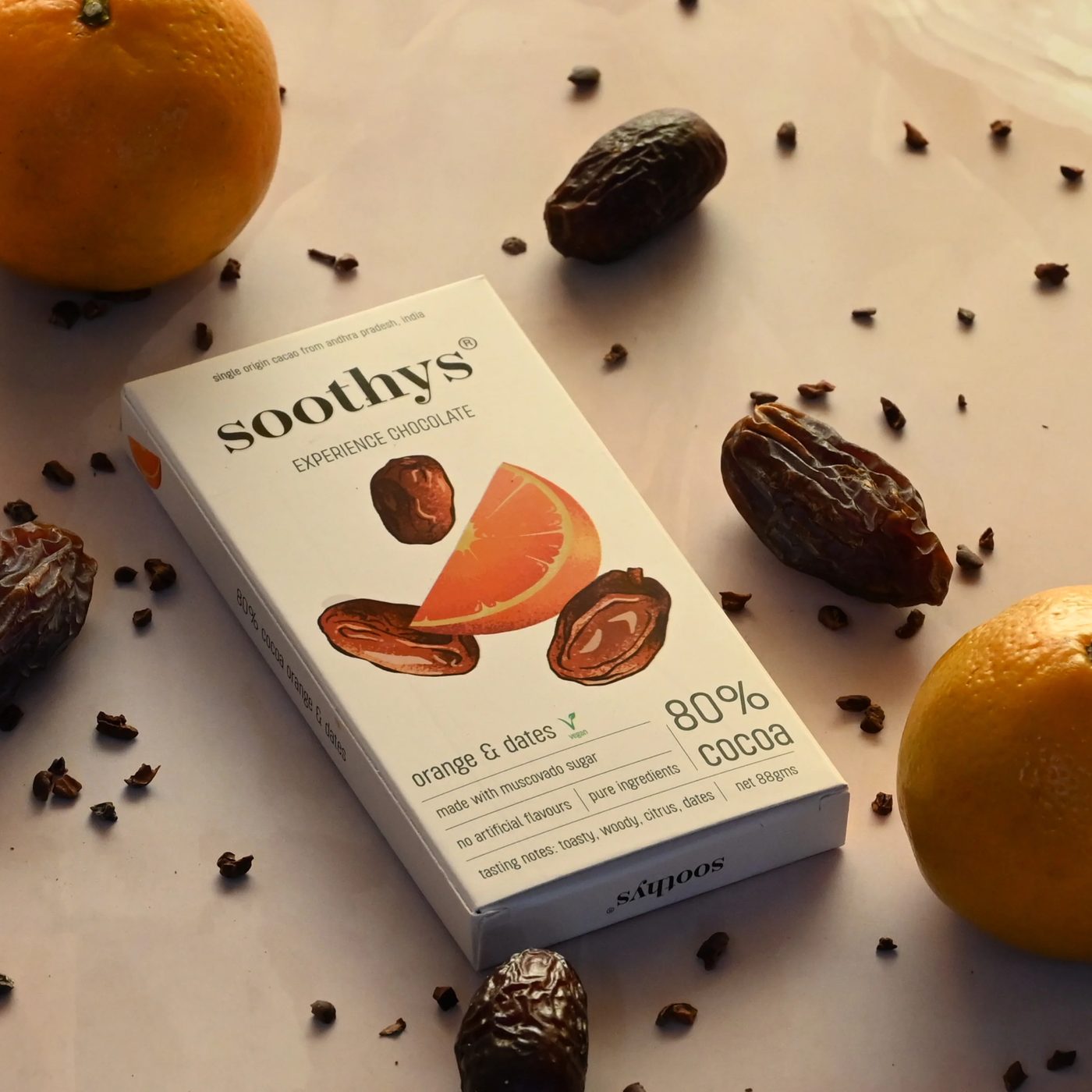
About Soothys
Soothys is a clean-label chocolate brand that launched into one of the most crowded shelves in Indian D2C. It arrived with no sales data, no proof of which products would move, and a website converting at 1.3%. There was no ad history to read and no benchmark to aim at. The Shizz built the brand from a blank page: the positioning, the product story, and the creative to carry both.
Meta and Google ran acquisition, a content engine kept the creative pipeline full, and CRO ran continuously on the landing pages. Inside three months Soothys had 208% revenue growth, double the revenue it started with, and conversion at 6%. More usefully, it had a system it could read and repeat.
In a saturated category, a clear point of view does more work than a better product. Soothys did not need a new recipe. It needed a reason to be chosen.
The challenge
Soothys started with nothing to read. No digital presence, no past campaigns, no benchmarks. Product-market fit was a hypothesis, not a fact. That matters more than it sounds. With no purchase history, the ad platforms have no events to optimise against, so early spend buys learning before it buys revenue, and every wrong assumption gets paid for twice. The website converted at 1.3%, which meant almost every paid visitor left without buying, so even the learning was expensive.
The category offered no cover. Clean-label chocolate is full of brands making near-identical claims about sugar, sourcing and ingredients. On a shelf that dense, a nice product is not a strategy. Soothys needed clarity, conviction, and a reason to be chosen over the bar next to it.
What we corrected
The first correction was a point of view. Soothys was given one line to defend: guilt-free indulgence that actually tastes like a treat. That single decision settles a hundred smaller ones, which SKU leads, which photograph runs, what the landing page says above the fold, because every choice now has a test to pass. The second correction was making each touchpoint answer to conversion rather than to taste.
The landing page was rebuilt around the buying decision, and creative was built to stop a scroll rather than to look good in a deck. The third was to stop arguing internally. SKUs, audiences, formats and hooks were tested against each other until the winners were obvious instead of assumed, and budget only followed evidence.
Our approach
Positioning came first and everything downstream inherited it: modern clean-label chocolate for people who want fun, health and flavour without the trade-off. Every visual carried that clarity, so the ads and the site told one story. On Meta, testing was structured across awareness, engagement and conversion rather than run as one flat pool. That separation matters, because the hook that wins attention is rarely the asset that closes a sale, and mixing them hides which one is failing.
Reading each stage on its own meant losers were cut early and winners identified fast. A steady content engine fed fresh creative into the ad sets that were working, which is how a winning angle keeps earning after the first version fatigues. Landing-page CRO ran alongside it.
The results
Three months in, Soothys had grown revenue 208%, with order volume doubled and conversion up from 1.3% to 6%. Growth held at a consistent 50% month on month rather than arriving in one jump, and steady compounding is the signal that a system is working rather than a single creative. A spike usually means one asset caught a moment and will fatigue.
Testing also surfaced two hero products that now drive over 60% of sales, which changes how budget is allocated from that point on: the catalogue stops being treated equally and the proven sellers carry the spend. Soothys moved from asking whether paid would work at all to scaling against numbers it could trust.
Why positioning beats targeting in a crowded food category
In a saturated food category, every competitor buys the same audiences with the same ingredient claims, so targeting is rarely where the advantage sits. The variable that separates two otherwise identical ads is the point of view behind them: who this is for, what it replaces, what the buyer is allowed to feel about eating it. That is testable in the same way a hook is testable, and it should be tested first, because a strong angle improves every number downstream while a clever audience cannot rescue a generic one.
Two habits follow. Test positioning as a set of competing propositions rather than as variations of one, so the outcome is a decision and not a preference. And read the catalogue honestly, because a range rarely sells evenly and the products that win cold to a stranger are often not the ones that win on a shelf. That is what tells a founder where the budget belongs.
What we ran
On Soothys, The Shizz ran Meta Ads, Google Ads, Content Creation, Social Media Marketing, Retention Marketing and CRO Consultation.
Questions, answered
What did The Shizz do for Soothys?
The Shizz built Soothys from a blank page. It set the positioning as modern clean-label chocolate, rebuilt the landing pages around conversion, and ran structured testing on Meta and Google across SKUs, audiences, formats and hooks. A content engine kept fresh creative flowing into the winning ad sets. Soothys grew revenue 208% in three months.
How did Soothys lift its conversion rate from 1.3% to 6%?
Soothys lifted conversion from 1.3% to 6% by rebuilding every touchpoint around the buying decision rather than around presentation. The Shizz reworked the landing page, matched ad creative to what the page promised, and kept CRO running continuously instead of treating it as a one-off project. Over the same three months, order volume doubled.
Which products drive most of Soothys' sales?
Testing by The Shizz surfaced two hero products that now drive over 60% of Soothys' sales. That changed how budget is allocated: rather than spreading spend evenly across the catalogue, the proven sellers carry the acquisition load and the rest of the range earns its money after the first order.
Who handles Soothys' performance marketing?
The Shizz handles Soothys' performance marketing. The engagement covered Meta Ads, Google Ads, content creation, social media marketing, retention marketing and CRO consultation for the clean-label chocolate brand, which grew revenue 208% in 3 months.
How did Soothys grow so fast?
Positioning came first: modern clean-label chocolate for people who want fun, health and flavour without the trade-off. Meta testing was structured across awareness, engagement and conversion so losers were cut early and winners identified fast, while a steady content engine and landing-page CRO lifted conversion from 1.3% to 6%. Growth held at a consistent 50% month on month.
More case studies
- 1970 Shop
From zero to ₹70 lakhs a month in just 8 months.
- Pro Nature
From a 1.2x ROAS to an 8x scale in 10 months.
- Kroslo
ROAS doubled in just 25 days.
Want numbers like these for your brand?
We will tear down your funnel, creative and numbers, free and with no pitch, and hand you a 90-day growth roadmap you keep.
Book a Growth Audit →WhatsApp us